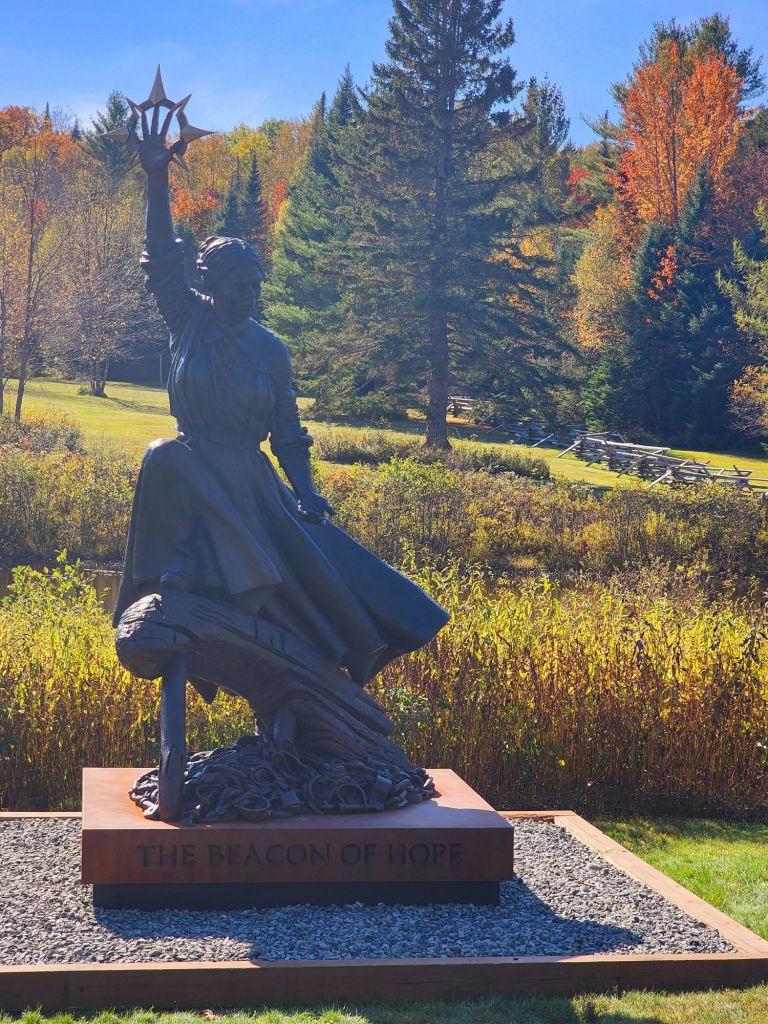
This election is about more than just policies—it’s about the rights and freedoms women deserve but have had to continuously fight for. Every day, women are controlled in countless ways: how we dress, how we express ourselves, and even how we live and love. Assertiveness is often labeled as aggression, ambition is misconstrued as arrogance, and personal decisions—about our bodies, our careers, our futures—are scrutinized or decided for us.
Women’s rights are constantly debated, legislated, and restricted. The government has sought to control not only our choices but our very autonomy. From reproductive rights to pay equity, from access to healthcare to the way society shapes our roles, the question is often whether we have the right to determine our own paths or must live within boundaries set by others.
If Donald Trump is re-elected, the progress we’ve fought so hard for could be erased, putting our reproductive freedoms, voting rights, and the ability to shape our futures in serious jeopardy. The hard-won gains that have allowed women to fully participate in society will be under threat, and our already fragile democracy may further drift towards authoritarianism.
When we vote, we are voting for the right to live freely, without being forced into roles that fit outdated expectations. We are voting to reclaim our power—to define our own futures, to love who we want, to choose our careers without limitations, and to have our voices heard and respected.
This election is a choice: will we continue to allow others to dictate how we live, or will we stand up and take control of our own destinies? The answer lies in the power of our vote.
Reproductive Rights
Limiting women’s reproductive choices has never truly been about saving the unborn—it’s about control. It’s about forcing women into maternal and household roles, stripping away their autonomy, and cementing the belief that their value lies in bearing children, not in leading independent, self-directed lives. When governments and groups of men push for restrictions on what women can do with their bodies, they are exercising power, not compassion. They are sending a clear message: women’s bodies are not their own, and their role is predetermined by those who seek to uphold outdated, patriarchal norms.
Meanwhile, men face no such control over their reproductive choices. Viagra and other sexual health aids are freely accessible, with no moral outcry, no legislative hurdles, no questioning of whether men should be allowed to control their own bodies. The hypocrisy is blatant: if the concern was truly about life and morality, why isn’t there equal scrutiny over men’s choices? The truth is, this fight isn’t about protecting anyone—it’s about policing women, reinforcing their place in the home, and maintaining power structures that keep women subservient. Women deserve the same freedom to make decisions about their own bodies, without interference or judgment, just as men do.
*I have personal reservations about abortion, but I firmly believe that the decision should be my choice (and a woman’s choice alone), not a decision made by the Courts or men.
Equality & Justice
Dismantling equality and justice programs would unravel decades of progress toward a more inclusive and fair society. These programs are the backbone of a system designed to level the playing field for those historically marginalized. Without them, we risk normalizing discrimination and inequality, closing the doors to opportunity.
For women, ending gender equality programs would be catastrophic. Protections against workplace discrimination, the fight for equal pay, and efforts to enter male-dominated fields like STEM would be obliterated, reverting us to a time when a woman’s value was confined to domestic roles. The opportunity gap would widen, pushing women, especially those from underrepresented communities, further into the margins.
The erosion of justice programs, such as those under the Violence Against Women Act, would leave countless women vulnerable to violence and exploitation, stripping away essential resources that help survivors seek justice and rebuild their lives. Without these protections, abusers would face fewer consequences, and women would again suffer in silence.
Moreover, dismantling racial justice programs would deepen disparities across healthcare, education, and employment, with women of color bearing the heaviest burden. Access to affordable healthcare, housing, and education would evaporate, locking entire communities into cycles of poverty while those in power continue to thrive.
These programs are not about giving unfair advantages; they are essential to correcting a broken system and ensuring equal opportunity for all. Eliminating them is not merely a setback; it is a conscious choice to maintain the biases and power structures that have oppressed people for generations. Without equality and justice programs, the ideals of democracy and fairness will collapse, leaving us to tolerate injustice as the norm.
Voting Rights
The efforts to roll back voting rights are a direct assault on decades of progress, especially for women and marginalized communities. The ratification of the 19th Amendment over a century ago was a monumental victory, symbolizing dignity and equality for women. However, true suffrage wasn’t achieved for all until the Voting Rights Act of 1965, which addressed the ongoing disenfranchisement of women of color.
Today, we face renewed threats as voter suppression tactics like stricter ID laws, voter roll purges, and reduced access to mail-in voting disproportionately impact women, particularly those from marginalized backgrounds. These measures undermine the very foundation of democracy that generations of women fought to establish.
The promise of the 19th Amendment remains unfulfilled, and without vigilant protection of voting rights, women risk being marginalized once again, silencing their voices in the political arena. Our fight for voting rights and gender equality is far from over; we must commit ourselves to safeguarding these fundamental freedoms for future generations.
Why Vote?
This election is pivotal for every woman, daughter, mother, sister, and granddaughter. At stake are the fundamental rights that define our ability to make choices about our own bodies, our careers, and our futures. For generations, women have fought for the freedoms we now enjoy—reproductive rights, the ability to vote and have our voices heard, access to healthcare, and equal participation in society. These are not guarantees; they are victories that can be lost.
The choices made in this election will shape not only our lives but those of future generations. Do we want our daughters to grow up in a world where their rights are protected, where they have the freedom to make decisions about their own bodies and futures? Do we want a society where our sisters and mothers are treated with the dignity and equality they deserve, where they are not controlled or limited by outdated norms?
Our vote is the power we have to ensure that the progress we’ve made isn’t reversed. It’s about protecting the world we want to leave for our grandchildren—a world where women are not silenced, where they can love, live, and pursue their dreams without fear of oppression or restriction. The stakes are high, and our vote is our strongest tool to safeguard the rights and freedoms of all women, present and future. So, VOTE like your life depends on it – because for more then half of us it does!

